
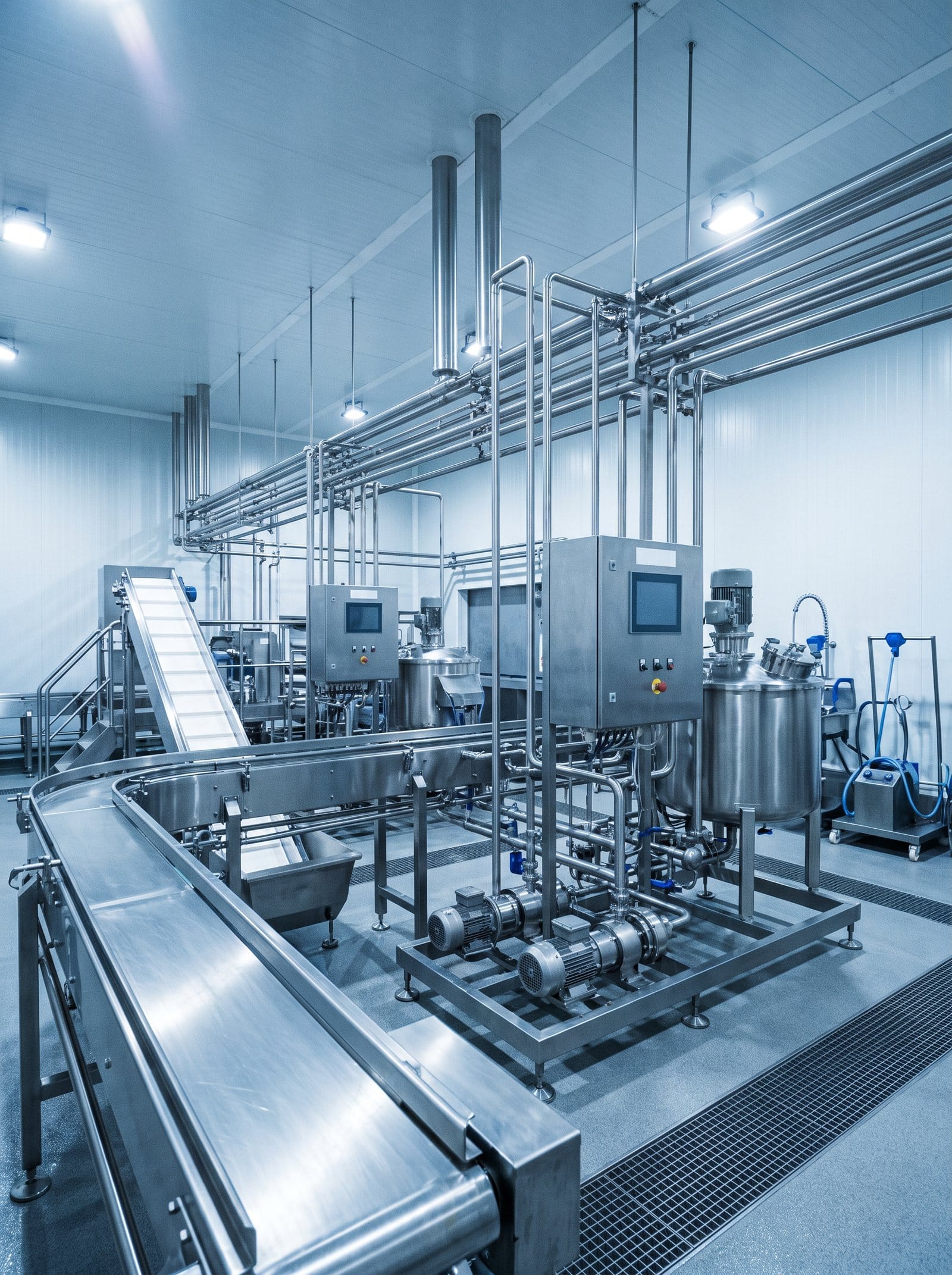
Food & Beverages
Infrastructure that stands up to washdown.
Food and beverage production combines washdown cleaning, temperature extremes and continuous operation: conditions most network hardware was never specified for.
What makes it hard
The challenges we are asked to remove.
- Washdown regimes and hygiene rules that standard IT hardware cannot survive
- Chilled and frozen areas that affect wireless propagation and equipment ratings
- Process control and corporate systems sharing infrastructure without segregation
- Traceability and recall obligations dependent on continuous data capture
- Short maintenance windows within continuous production
Diagram showing food and beverage production technology as connected layers: process and packaging line interfaces, hygiene-zone-appropriate infrastructure, industrial networking and segmentation, cold-chain and environmental monitoring, CCTV, access control and traceability support, all supported by managed operations.
Sector context
What makes food and beverage technology different in the UAE
Hygienic design constrains equipment before function does. Production halls are washed down, so enclosures, cameras and access devices are selected by ingress protection rating and material before capability, and containment is chosen so it can be cleaned rather than merely reach. Work in a production area follows the site's hygiene rules, which govern access, tools and when an area can be opened at all. These are constraints the network design accommodates, not ones it can negotiate.
Food safety records are regulatory records, and the regulator depends on the emirate. Dubai Municipality operates its own food code and Abu Dhabi is regulated by the Agriculture and Food Safety Authority, both expecting food safety systems built on HACCP principles, so monitoring data such as temperature at a critical control point carries retention and integrity requirements ordinary operational telemetry does not. Halal requirements bring segregation and traceability into the same systems. With most supply imported and moved in ambient temperatures above forty degrees, cold chain monitoring is a compliance record in transit as well as an operational alert, and gaps in it are findings rather than inconveniences.
Relevant capabilities
How we respond.
IP-rated and hygienic-area network infrastructure
OT and IT segmentation for process control
Temperature and cold-chain monitoring integration
Wireless coverage for scanning and production areas
CCTV, access control and site security systems
Certifications, framework positions and sector references are stated only once verified. Relevant evidence is shared during qualification, subject to confidentiality.
Next step
Bring the complete environment into one conversation.
Tell us what you are planning, replacing, integrating or trying to stabilise. We will help define the right next step.