
Advertising & Media
The infrastructure behind always-on media.
Studios, agencies and production teams move large volumes of content to fixed deadlines. The infrastructure underneath has to keep up without exposing client material.
What makes it hard
The challenges we are asked to remove.
- File sizes and transfer volumes that outgrow ordinary office networks
- Deadline-driven operations with little tolerance for downtime
- Client material that must be segregated and access-controlled
- Broadcast, production and corporate IT equipment on shared infrastructure
- Hybrid and remote production workflows that extend the security boundary
Diagram showing media production technology as connected layers: high-throughput studio and office networks, storage and media asset infrastructure, cloud and remote collaboration platforms, cybersecurity and content protection, AV, display and production communications, all supported by managed operations.
Sector context
What makes media and production technology different in the UAE
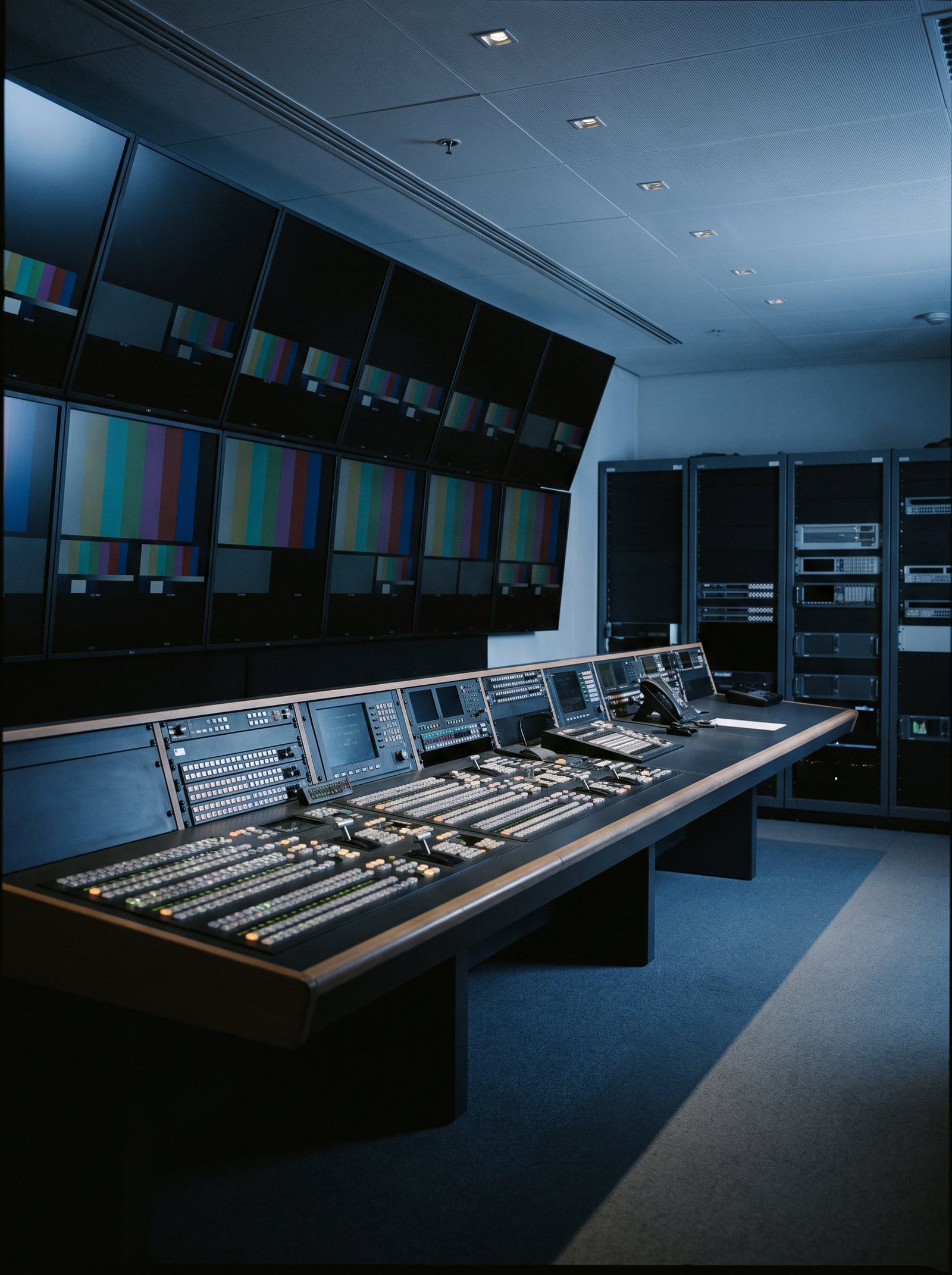
Production networks move large files against fixed deadlines. Shared storage bandwidth, not link speed, usually decides whether an edit suite performs, and colour critical review imposes requirements on display, calibration and the path between them that a general office design does not consider. Ingest, edit and archive have different performance profiles and different retention requirements, so treating them as one storage problem is what produces a system that is fast when empty and unusable when full.
Publication and even production carry permitting steps. Media activity in the state is licensed and content is subject to standards set by the UAE Media Council, and the media free zones operate their own permitting for production and broadcast activity, so the workflow contains compliance gates and the systems supporting them need to record who approved what and when. Audience and subscriber data falls under the applicable data protection regime. Archives are held for long periods, so the migration path off the current storage generation is part of the original design rather than a problem inherited by whoever is present when the format is retired.
Relevant capabilities
How we respond.
High-throughput networks for media storage and transfer
Studio, edit-suite and production-space cabling and AV infrastructure
Segmented, access-controlled environments for client content
Cloud and hybrid production infrastructure
Physical security and monitoring for studios and archives
Certifications, framework positions and sector references are stated only once verified. Relevant evidence is shared during qualification, subject to confidentiality.
Next step
Bring the complete environment into one conversation.
Tell us what you are planning, replacing, integrating or trying to stabilise. We will help define the right next step.